AudienceMx - Article
Repurposing Your Expertise: Converting Presentations, Workshops, and Talks Into LinkedIn Content
Discover how to transform your presentations into dozens of high-performing LinkedIn posts and establish lasting authority in your field.
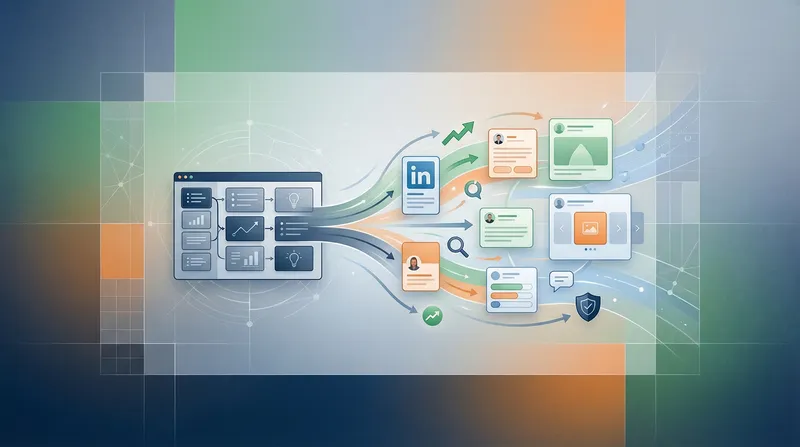
You've just delivered a powerful presentation to a room full of industry peers. The slides were polished, the insights were valuable, and the audience engagement was strong. But here's the challenge: that expertise and hard work disappear after the event ends, reaching only the people who were physically present. What if you could extract dozens of high-performing LinkedIn posts, thought leadership articles, and engagement-driving content from that single presentation? The reality is that most professionals leave tremendous value on the table by treating presentations, workshops, and speaking engagements as one-off events rather than content goldmines. This is where repurposing your expertise becomes a game-changer. By systematically converting your existing professional work into LinkedIn content, you can amplify your reach, establish authority in your field, and build a consistent content stream without starting from scratch. This comprehensive guide walks you through a proven framework for transforming your presentations, client projects, and speaking engagements into compelling LinkedIn posts and articles that resonate with your professional network.
Understanding the Power of Content Repurposing for LinkedIn Authority
Content repurposing is the strategic practice of taking existing professional knowledge and reformatting it for different platforms, audiences, and consumption styles. For LinkedIn professionals, this approach is transformative because it solves two critical problems simultaneously: the constant demand for fresh content and the challenge of creating that content consistently. Learn more in our post on Building Authority Through Niche Expertise: How to Own a Specific Topic on LinkedIn.
When you repurpose your expertise, you're not creating content from thin air. Instead, you're leveraging work you've already invested time and thought into developing. A single 60-minute presentation typically contains 20 to 30 distinct ideas, case studies, frameworks, and actionable insights. Each of these elements can become its own LinkedIn post, article, or discussion starter. Rather than spending hours brainstorming new topics, you're mining your existing intellectual property for content that's already proven to resonate with your audience.
The strategic advantage extends beyond efficiency. When you consistently share insights from your presentations and workshops on LinkedIn, you create a narrative arc that demonstrates your expertise across multiple touchpoints. Your network sees you as someone who doesn't just attend industry events or conduct workshops in isolation - they see you as a thought leader who actively shares knowledge and drives conversations in your field. This consistency builds trust and positions you as someone worth following, engaging with, and ultimately, doing business with.
Content repurposing multiplies the return on investment of every presentation you deliver. A single hour of speaking can generate weeks or months of LinkedIn content, each piece reinforcing your authority and expanding your reach far beyond the original event.
LinkedIn's algorithm also favors creators who maintain consistent posting schedules. By repurposing your existing work, you can sustain that consistency without burning out on ideation. This means more visibility, more engagement, and more opportunities for your content to be seen by decision-makers in your industry.
Building Your Content Extraction Framework
The key to successful repurposing is having a systematic framework that helps you identify, extract, and organize valuable content from your presentations and workshops. Without structure, you'll either miss opportunities or feel overwhelmed by the possibilities. The following framework breaks down the process into manageable steps. Learn more in our post on The Expertise Refresh: Staying Relevant by Continuously Updating Your Knowledge and Content.
Step One: Conduct a Content Audit of Your Existing Work
Start by cataloging all the presentations, workshops, webinars, and speaking engagements you've delivered in the past 12 to 24 months. Gather your slides, notes, recordings, and any supporting materials. This inventory becomes your content library - the raw material you'll mine for LinkedIn posts.
As you review each presentation, ask yourself these questions: What were the three to five core takeaways? What frameworks or methodologies did I introduce? What case studies or real-world examples did I share? What objections or challenges did the audience raise? What data or research did I reference? Each answer is a potential content piece waiting to be extracted.
Step Two: Identify Content Themes and Pillars
Once you've audited your work, look for recurring themes. You might notice that across multiple presentations, you consistently discuss customer retention strategies, digital transformation challenges, or team leadership principles. These themes become your content pillars - the foundational topics that define your expertise on LinkedIn.
Organizing your repurposed content around clear pillars serves multiple purposes. It helps your LinkedIn audience understand what you stand for and what they can expect from your posts. It also makes it easier for you to maintain a balanced content mix and avoid repetition. When you're drawing from multiple presentations, having clear pillars prevents you from posting about the same topic five times in a month.
Step Three: Break Down Presentations Into Atomic Content Units
Think of your presentations as collections of atomic content units - individual ideas, insights, or frameworks that can stand alone. A single slide might contain multiple atomic units. For example, a slide about "Five Steps to Improve Team Collaboration" contains five separate ideas, each of which could become its own LinkedIn post.
Go through your presentation materials slide by slide and list every distinct idea, statistic, framework, story, or insight. Don't worry about organization at this stage - just extract. You'll typically find 20 to 40 atomic units in a standard business presentation. Each of these becomes a building block for your LinkedIn content strategy.

Converting Presentations Into Different LinkedIn Content Formats
Once you've identified your atomic content units, the next challenge is translating them into formats that work on LinkedIn. Different content formats perform differently, and variety keeps your audience engaged. Here are the primary formats you can use to repurpose your presentation material. Learn more in our post on Content Pillars vs. Content Chaos: Structuring Your LinkedIn Strategy for Long-Term Growth.
The Insight Post - Standalone Takeaways
The most straightforward repurposing approach is extracting a single insight from your presentation and packaging it as a standalone LinkedIn post. These posts typically open with a hook that addresses a pain point or challenge, provide the insight or framework, and close with a call to action.
For example, if your presentation included a section on "Three Common Mistakes in Sales Onboarding," you could create three separate LinkedIn posts - one for each mistake. Each post would explain the mistake, illustrate why it matters, and offer a quick solution. This approach maximizes the value of your existing content while keeping individual posts focused and digestible.
The Case Study Post - Real-World Applications
If your presentation included client examples, case studies, or real-world applications of your frameworks, these are goldmines for LinkedIn content. Case study posts perform exceptionally well because they demonstrate tangible results and practical implementation. They answer the question every LinkedIn professional asks: "How does this actually work in the real world?"
When repurposing a case study from your presentation, focus on the transformation. What was the situation before? What specific actions were taken? What were the results? Structure your post to highlight the before-and-after contrast, which makes the impact immediately clear to readers. You can also create a series of posts from a single case study - one post for the problem, another for the solution approach, and a third for the results.
The Framework Post - Methodologies and Systems
Frameworks, models, and methodologies are some of the most shareable content on LinkedIn. If your presentation introduced a new way of thinking about a problem or a step-by-step process, that's perfect material for framework posts. These posts work well because they provide immediate, actionable value to your audience.
When converting a framework into a LinkedIn post, resist the urge to oversimplify. Instead, provide enough detail that readers understand the framework and can begin applying it. Use clear numbering or bullet points. Consider creating a visual representation of the framework if possible. If your framework is complex, you can create a series of posts that drill deeper into each component.
The Contrarian Post - Challenging Conventional Wisdom
Many presentations include moments where you challenge conventional thinking or present a perspective that differs from industry norms. These contrarian insights often generate the most engagement on LinkedIn because they spark discussion and debate. When repurposing these moments, lead with the contrarian statement and then provide evidence or reasoning that supports your position.
The key to successful contrarian posts is backing up your position with solid reasoning. Simply saying "everyone's wrong about X" without explanation comes across as clickbait. Instead, explain why conventional wisdom misses the mark and what you've observed that led you to a different conclusion.
The Data Post - Research and Statistics
If your presentation included research findings, survey results, or statistical insights, each of these can become a standalone post. Data posts perform well on LinkedIn because they establish credibility and provide concrete support for your perspective. When repurposing data from your presentations, focus on the implications rather than just the numbers.
For example, rather than posting "73% of companies struggle with remote team management," frame it as "73% of companies struggle with remote team management - here's why and what you can do about it." This approach takes the data point and connects it to something actionable for your audience.
The Question Post - Engagement Drivers
Questions are among the highest-engagement content formats on LinkedIn. As you review your presentations, identify moments where you posed questions to the audience or raised questions that your content addressed. These questions can become the foundation for engagement-focused posts that invite your network to share their perspectives.
When repurposing a question from your presentation, provide some context so readers understand why you're asking, then ask the question directly. You might also share what you've observed or learned about that question, which encourages others to share their own experiences.
Creating a Repurposing Workflow That Scales
The framework and formats are valuable, but without a systematic workflow, repurposing can feel chaotic. A scalable workflow ensures you consistently extract and publish content without overwhelming yourself. Here's how to build one.
Establish a Content Extraction Schedule
Rather than trying to extract all content from a presentation immediately after delivering it, schedule dedicated extraction sessions. Within 48 hours of completing a presentation, spend 30 to 45 minutes reviewing your materials and listing the atomic content units you identified. While the presentation is fresh in your mind, you'll capture nuances and details you might forget later.
Schedule these extraction sessions in your calendar just like any other meeting. This ensures the work gets done and doesn't get perpetually pushed to the back of your to-do list. Once you've extracted the units, organize them in a simple spreadsheet or document that includes the topic, format, key points, and any supporting materials.
Build a Content Calendar From Your Extracted Units
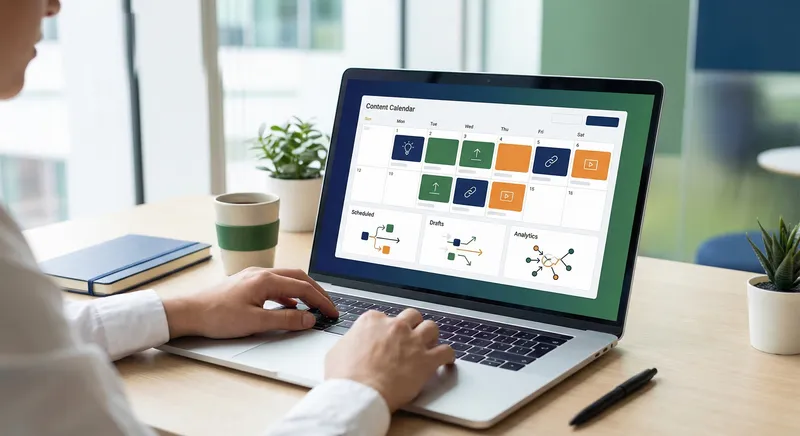
Once you've extracted content units from multiple presentations, you have a backlog of material ready to be turned into posts. Rather than publishing randomly, build a content calendar that distributes your repurposed content strategically. Aim for a mix of formats - don't publish five insight posts in a row. Instead, alternate between insight posts, case studies, frameworks, and questions.
A typical sustainable posting schedule is three to five times per week. If you're extracting 30 atomic units from each presentation and you deliver presentations monthly, you have enough material to maintain consistent posting without creating new content from scratch. This is the efficiency gain that makes repurposing so powerful.
Create Templates for Common Formats
To speed up the conversion from extracted units to finished posts, create templates for your most common formats. An insight post template might look like this:
Hook: [Open with a question or surprising statement]
Context: [Explain why this matters]
Insight: [Share the key takeaway from your presentation]
Application: [Provide a practical way to apply this]
Call to Action: [Ask for engagement or encourage sharing]
Having these templates ready means you're not starting from a blank page each time you create a post. You're simply filling in the blanks with your extracted content. This dramatically speeds up the process and ensures consistency across your posts.
Leverage Tools to Streamline the Process
Modern content creation tools can significantly accelerate your repurposing workflow. Tools that offer content ideation, personalized post generation, and automated content planning eliminate much of the manual work involved in transforming your extracted units into finished posts. Look for tools that allow you to upload your presentation materials, PDFs, or notes, then generate post variations automatically. This approach maintains your voice and expertise while dramatically reducing the time investment.
The best tools also offer editing and tone improvement features, allowing you to refine generated content to match your brand voice perfectly. Some tools even provide content calendar automation, which takes the guesswork out of scheduling and ensures consistent posting.
Strategies for Maximizing Engagement and Reach
Simply converting your presentations into LinkedIn posts isn't enough - you need to optimize for engagement and reach. Here are strategies that amplify the impact of your repurposed content.
Create Content Series From Single Presentations
Rather than distributing your extracted content randomly, consider organizing related atomic units into content series. A series might be "Five Mistakes in Sales Enablement" posted over five consecutive weeks, or "The Complete Guide to Remote Team Leadership" spread across seven posts that build on each other. Series create continuity and give your audience a reason to keep following your content.
Series also perform better algorithmically because they encourage people to engage with multiple posts from the same creator. When someone engages with post one in a series, they're more likely to see and engage with posts two and three.
Add New Commentary and Current Context
When repurposing content from presentations delivered months or even years ago, add fresh commentary that connects the material to current market conditions, recent news, or evolving trends. This approach prevents your posts from feeling dated and demonstrates that you're actively thinking about your topic rather than simply republishing old material.
For example, if you're repurposing a framework from a presentation delivered before recent industry shifts, you might add a note like "I shared this framework two years ago, and recent market changes have made this even more relevant. Here's why..." This positions you as someone who learns and adapts rather than someone stuck in the past.
Encourage Engagement With Genuine Questions
Repurposed content doesn't have to be one-way broadcasting. Use your posts to invite your network to share their experiences, ask follow-up questions, or provide additional perspectives. When you ask genuine questions in your posts, you signal that you're interested in dialogue, not just broadcasting your expertise.
The questions you ask should be specific enough to guide responses but open enough to allow for varied answers. "What's your experience with this?" is too vague. "What's been your biggest challenge when implementing this framework?" is specific and invites meaningful responses.
Cross-Reference Your Repurposed Content
As you build your library of repurposed posts, look for opportunities to cross-reference them. If you've posted about a framework and later post about a case study that applies that framework, mention the previous post and link to it. This creates a web of interconnected content that keeps people engaged longer and demonstrates the depth of your expertise.
Cross-referencing also helps newer members of your network discover your older, valuable posts. Someone who just started following you might see a recent post that references an older post, leading them to explore your content history and deepening their understanding of your perspective.
Update and Republish Your Best Performers
Once you've published repurposed content and tracked its performance, identify your top-performing posts. These are pieces that generated significant engagement, reach, or meaningful comments. After several months, consider refreshing and republishing these posts with updated data, new examples, or expanded insights.
Republishing isn't the same as duplicating - you're genuinely improving the post with new information. Your network is large and constantly changing, so a post that performed well six months ago will reach a largely different audience if you publish an updated version. Just ensure you're adding genuine value rather than simply recycling the same content.
Extracting Content From Different Presentation Types
Different types of presentations and professional engagements offer different content opportunities. Understanding how to extract the maximum value from each type ensures you're not leaving content on the table.
Internal Presentations and Training Sessions
If you deliver presentations to internal teams or conduct training sessions within your organization, these are excellent content sources. The insights you share with your team are often valuable to your broader professional network. The key is translating internal-facing content into external-facing material.
When repurposing internal presentations, ensure you're not sharing confidential information. Instead, focus on the methodologies, frameworks, and principles you're teaching. These are universally applicable and valuable to your LinkedIn audience. For example, if you've developed a training program on client communication, the frameworks and techniques are shareable even if the specific client examples are not.
Conference and Industry Event Presentations
Presentations you deliver at industry conferences are already vetted by event organizers and curated for relevance. This means they're inherently shareable content. When repurposing conference presentations, emphasize the insights that resonated most strongly with the live audience. If certain points generated lots of questions or discussion, those are particularly valuable for LinkedIn content.
You can also leverage the conference context in your posts. Mentioning that you presented this insight at a specific conference adds credibility and gives your posts a news hook. For example: "At [Conference Name] last week, I shared this framework for evaluating technology investments. Here's why it matters..."
Webinars and Virtual Presentations
Webinars often include Q&A sessions where attendees ask questions about your material. These questions are goldmines for content ideas. The questions people ask reveal what's confusing, what's most valuable, and what your audience cares most about. Use these questions to guide your repurposing strategy.
If your webinar was recorded, you can also extract direct quotes or powerful moments from the recording and share them as posts. A particularly insightful 30-second segment from your webinar can become a short-form post with a link to the full recording, driving traffic back to your original content.
Workshops and Interactive Sessions
Workshops are particularly rich sources of content because they often involve exercises, discussions, and collaborative problem-solving. The insights that emerge from workshop discussions are often more nuanced and practical than presentation material alone. When attendees work through a problem together and discover solutions, those solutions become valuable content.
Document the key takeaways and "aha moments" from your workshops. These often make for powerful LinkedIn posts because they represent real-world application and group learning. You might post something like "In today's workshop, this team discovered a simple shift in how they approach X that immediately improved Y. Here's what they learned..."
Client Engagements and Project Work
If you work directly with clients on projects or engagements, this work is a rich source of content. The challenges clients face, the solutions you develop, and the results you achieve are all valuable for your LinkedIn audience. The key is extracting lessons that apply broadly rather than focusing on client-specific details.
When repurposing content from client work, always ensure you have permission to share. You don't need to mention the client by name - in fact, anonymizing case studies often makes them more relatable because readers don't feel like the example is irrelevant to them. Focus on the challenge, your approach, and the results. The principle or methodology is what your audience cares about, not the specific company.
Overcoming Common Repurposing Challenges
Content repurposing sounds simple in theory, but professionals often encounter challenges in practice. Understanding these challenges and how to address them ensures your repurposing efforts stay on track.
Challenge: Feeling Like You're Repeating Yourself
When you're extracting multiple posts from a single presentation, you might worry that you're repeating the same message. This concern is understandable but often misplaced. The key insight is that your audience is much larger and more diverse than the people who attended your original presentation. Most of your LinkedIn network never saw your presentation, so your posts aren't repetition to them - they're new information.
Additionally, different people consume content differently. Some people engage with frameworks, others with case studies, and still others with questions and discussions. By repurposing the same core insight in multiple formats, you're making it accessible to different learning styles and preferences. The person who skipped your insight post might engage deeply with your case study post covering the same topic.
Challenge: Maintaining Freshness and Avoiding Staleness
Presentations delivered months or years ago can feel dated. Addressing this challenge requires adding contemporary context to your repurposed content. Reference recent news, current market conditions, or new research that validates or updates your original insights. This approach prevents your posts from feeling like you're recycling old material.
You can also create "then and now" posts that revisit an old insight and share how your thinking has evolved. "Three years ago I shared this framework. Here's what I've learned since then..." posts are engaging and demonstrate growth and learning.
Challenge: Extracting Content From Presentations With Limited Notes
Not every presentation comes with comprehensive notes or transcripts. If you're trying to repurpose presentations where documentation is sparse, start with your presentation slides. Slides are often information-dense and contain the core structure of your talk. Use your slides as the foundation and supplement with your memory of what you said during the presentation.
If you have recordings of your presentations, those are invaluable. You can review recordings to capture the specific language you used, the examples you shared, and the key points you emphasized. Transcription services can convert recordings to text, making it easier to extract specific quotes and insights.
Challenge: Managing a Large Volume of Extracted Content
Once you start systematically extracting content from presentations, you'll quickly accumulate more material than you can publish. Rather than viewing this as a problem, see it as an asset. A large content backlog gives you flexibility and reduces the pressure to constantly create new material.
Organize your backlog in a simple spreadsheet that tracks the topic, format, key points, and publication status. Organize your backlog by content pillar and format so you can easily find relevant content when you need to fill gaps in your content calendar. A well-organized backlog is a content creation superpower.
Challenge: Ensuring Accuracy and Relevance Over Time
As time passes, details in your presentations might become outdated. A statistic that was current when you presented might be old news. A framework you shared might have evolved based on new learning. Before publishing repurposed content, do a quick accuracy check. Update statistics, refresh examples, and ensure your frameworks still reflect your current thinking.
This doesn't mean you have to completely rewrite content, but a few minutes of verification ensures your posts remain credible and valuable. Outdated information damages your authority more than no content does.
Building Long-Term Authority Through Systematic Repurposing
The true power of content repurposing becomes apparent over time. Rather than viewing each presentation as a one-off event, systematic repurposing turns your professional work into a compounding asset that builds your authority continuously.
When you consistently share insights from your presentations and professional work on LinkedIn, you create a narrative. Your network begins to see you as someone who deeply understands your field, who actively practices what you preach, and who is committed to sharing knowledge. This perception opens doors - speaking opportunities, consulting engagements, partnership possibilities, and career advancement all flow from the authority you build through consistent content sharing.
The framework and strategies in this guide provide a structured approach to extracting that authority. Rather than creating content randomly or sporadically, you're systematically converting your existing expertise into a steady stream of valuable posts and articles. This consistency is what builds authority and expands your reach on LinkedIn.
Systematic content repurposing transforms your presentations from one-time events into enduring assets that build your professional authority and expand your reach for months or years after you deliver them.
The investment you make in developing presentations, conducting workshops, and engaging with clients is significant. By repurposing that work strategically, you multiply the return on that investment. A single well-developed presentation can generate 20, 30, or even 40 pieces of LinkedIn content when approached systematically. This efficiency allows you to maintain a consistent, valuable presence on LinkedIn without the constant pressure of creating new content from scratch.
Implementing Your Repurposing Strategy Today
The framework and tactics in this guide are valuable only if you implement them. Here's how to get started with your own content repurposing strategy.
First, conduct your content audit. Gather all your presentations, workshops, webinars, and professional materials from the past year. Don't worry about organizing them perfectly - just collect them in one place. Spend an hour reviewing these materials and identifying your content themes and pillars. What topics come up repeatedly? What expertise do you consistently share? These are your content pillars.
Second, select one presentation to use as your pilot project. Go through it systematically and extract 20 to 30 atomic content units using the framework outlined in this guide. Organize these units by format - identify which ones would work best as insight posts, case studies, frameworks, or questions. This exercise trains you in the extraction process and gives you a backlog of content to work with.
Third, create three to five posts from your extracted units and publish them over the next two weeks. Use the templates and formats outlined in this guide. Pay attention to which posts generate the most engagement and what types of content resonate most with your audience. This feedback guides your future repurposing efforts.
Fourth, schedule extraction sessions for your remaining presentations. Rather than trying to extract everything at once, schedule 30 to 45-minute extraction sessions after each presentation or workshop you deliver. This keeps the process manageable and ensures you capture insights while they're fresh.
Finally, build your content calendar and commit to a posting schedule. Whether you post three times a week or five times a week, consistency matters more than frequency. A sustainable schedule that you can maintain is better than an aggressive schedule you'll abandon after a month.
The beauty of content repurposing is that you don't need to be a content creation expert to succeed. You already have the expertise - you've proven it by delivering presentations and conducting workshops. You simply need a system for translating that expertise into the formats and platforms where your professional network gathers. This guide provides that system.
Your presentations, workshops, and professional engagements represent significant investments of time and expertise. That work deserves to reach beyond the original audience and timeframe. By systematically repurposing your expertise into LinkedIn content, you extend the value of that work indefinitely, build your professional authority, and create a consistent presence that keeps you top-of-mind for your network. The framework is straightforward, the formats are proven, and the potential impact is substantial. The only question remaining is when you'll start extracting the content that's already within your reach.
Conclusion
Repurposing your existing expertise into LinkedIn content isn't about creating more work - it's about working smarter. You've already invested the time to develop your knowledge, deliver presentations, and conduct workshops. The presentations are complete, the insights are solid, and the frameworks are proven. What remains is simply translating that work into bite-sized content that reaches your professional network where they're most active.
The five-step implementation plan outlined above removes the guesswork from content creation. By auditing your existing materials, running a pilot project, testing your approach, establishing a sustainable extraction process, and committing to a consistent posting schedule, you create a repeatable system that generates months of content from your current library of presentations and workshops.
The results speak for themselves: increased visibility, strengthened professional authority, deeper engagement with your network, and a consistent presence that positions you as a thought leader in your field. Best of all, you're not starting from scratch. Your content already exists. You're simply giving it new life in a new format.
Start this week. Pull together your presentations from the past year, identify your content pillars, and extract content from one presentation. You'll be surprised at how much valuable content you already have waiting to be shared. Your expertise deserves an audience beyond the room where you first shared it. LinkedIn is where that audience gathers. The framework is ready. The time to begin is now.